
What Is the Best Chinese Learning App for Absolute Beginners?
Starting Chinese from zero? Here is what a beginner app has to get right, and what happened when I put SureChinese through its first lesson, a Talk conversation, and a full week.
I get asked this a lot, and my answer has changed. It used to be "the one with the most content." Then I watched too many people download a giant app, poke at three lessons, and quit. Now I say: the best beginner app is the one that gets you through a small, complete loop on day one. Hear a word, understand it, say it, find out how you did, and come back tomorrow.
SureChinese is built around exactly that loop, so I made a free account, opened Lesson 1, and did everything the app asked of me for a week. What follows is what a beginner actually gets, screen by screen.
What a Complete Beginner Is Up Against
Chinese hits you with several new systems at once: tones, pinyin spellings, characters that look nothing like an alphabet, and a word order that puts the time before the verb. An app that teaches only one of those pieces feels easy for a week. Then you try to say something and the pieces do not connect.
So the job of a beginner app is not to be big. It is to do four things well:
- Give you a clear first step, even if you know nothing.
- Teach listening, speaking, reading, and writing together, not in separate silos.
- Make you produce language, not just tap the right answer.
- Make coming back tomorrow the easy option.
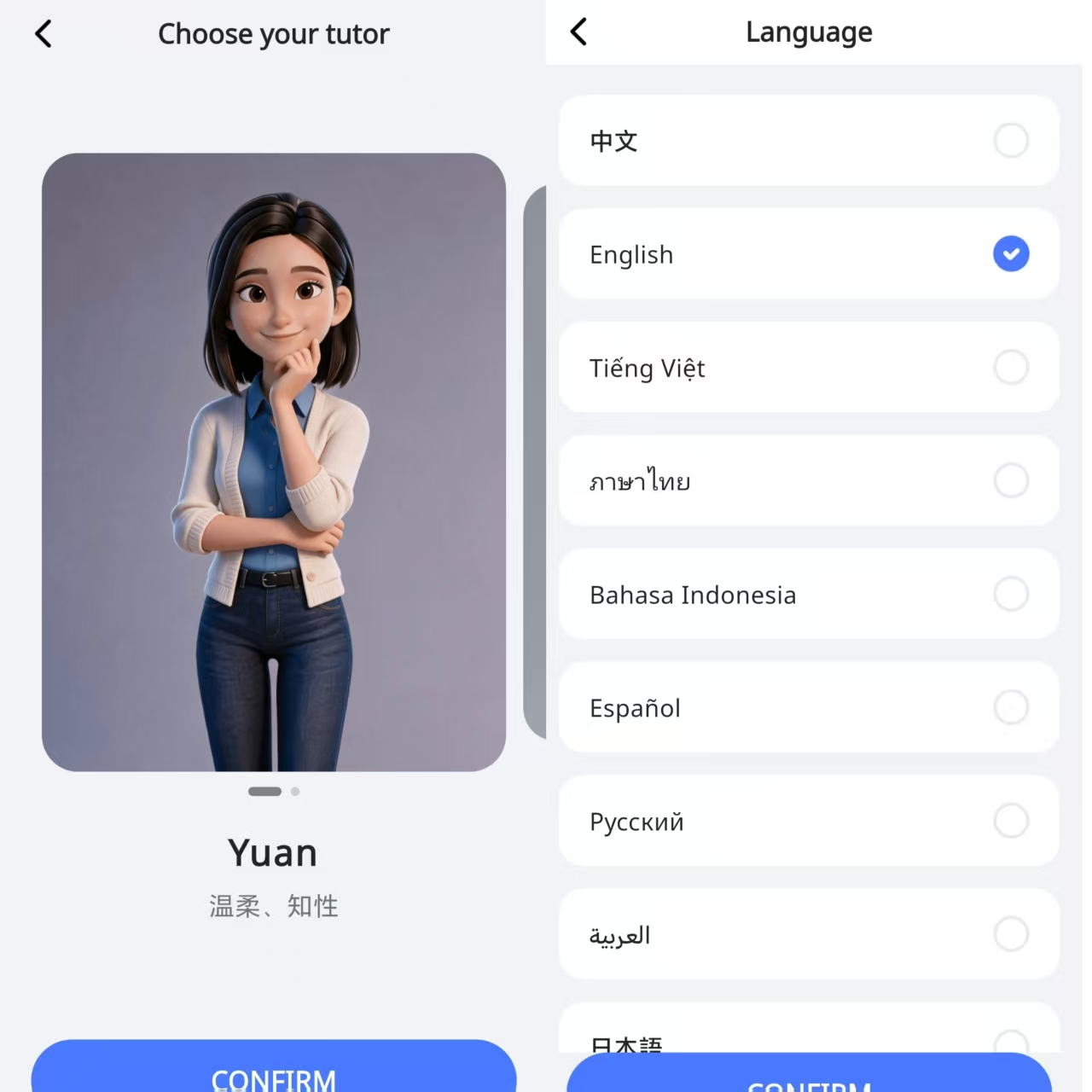
One small thing I noticed before I even logged in: the interface comes in twelve languages, and the list goes well past the usual suspects to Khmer and Bengali. If English is not your first language either, that matters more than any feature on the sales page.
Test 1: Can You Start Before You Know Anything?
The first lesson should not assume you already understand tones or pinyin. SureChinese gives you two doors in. The main course opens at Level 1, Unit 1, Lesson 1, "Daily Greetings," and everything after it stays locked until you get there. Next to it sits a separate Pinyin Course that starts with the initials b, p, m, and f and works through the whole sound system in four lessons. You pick one on the course-selection page, and you can switch whenever you like.
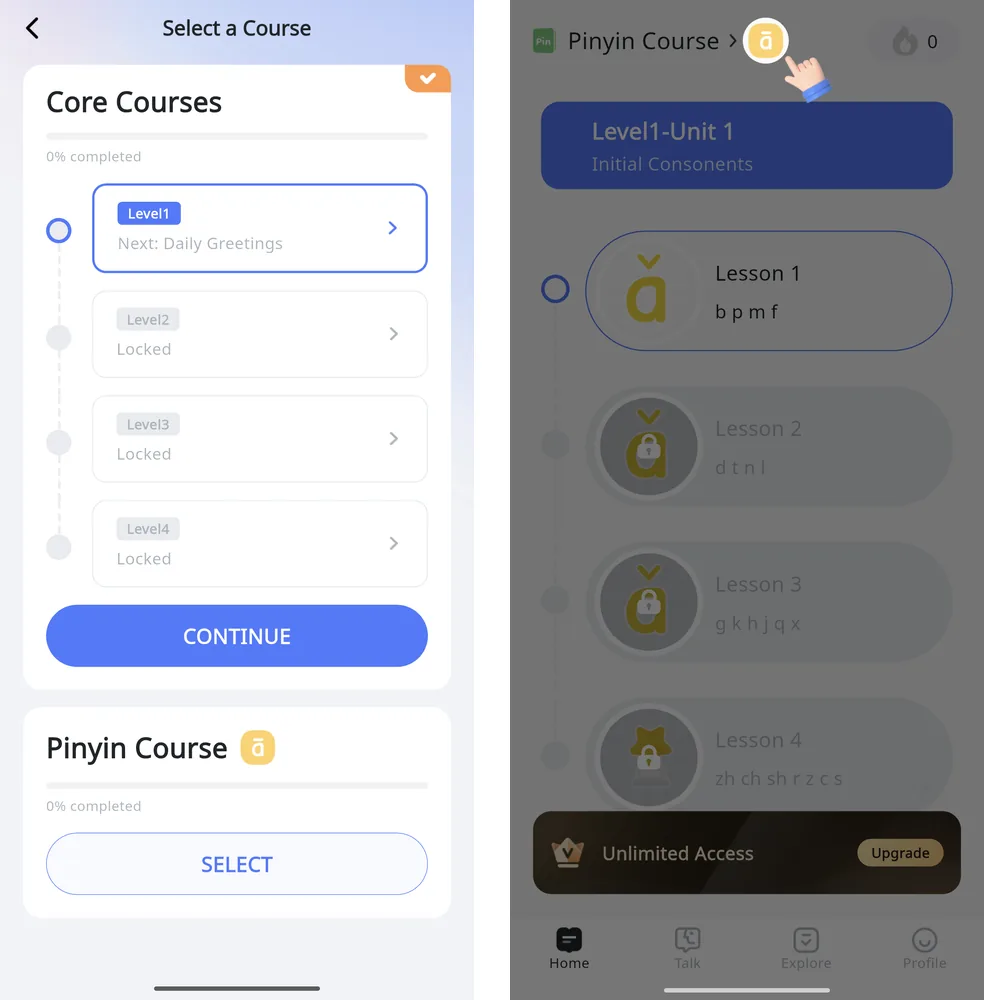
My advice: if the sounds are what scare you, spend your first two days in the Pinyin Course and then jump to the main track. If you would rather say a real sentence on day one, start with Daily Greetings. Either way, there is exactly one open lesson in front of you, which is the point.
Test 2: Does It Make You Open Your Mouth?
Tapping the right answer is not speaking. A good beginner course eases you into talking without making you feel silly.
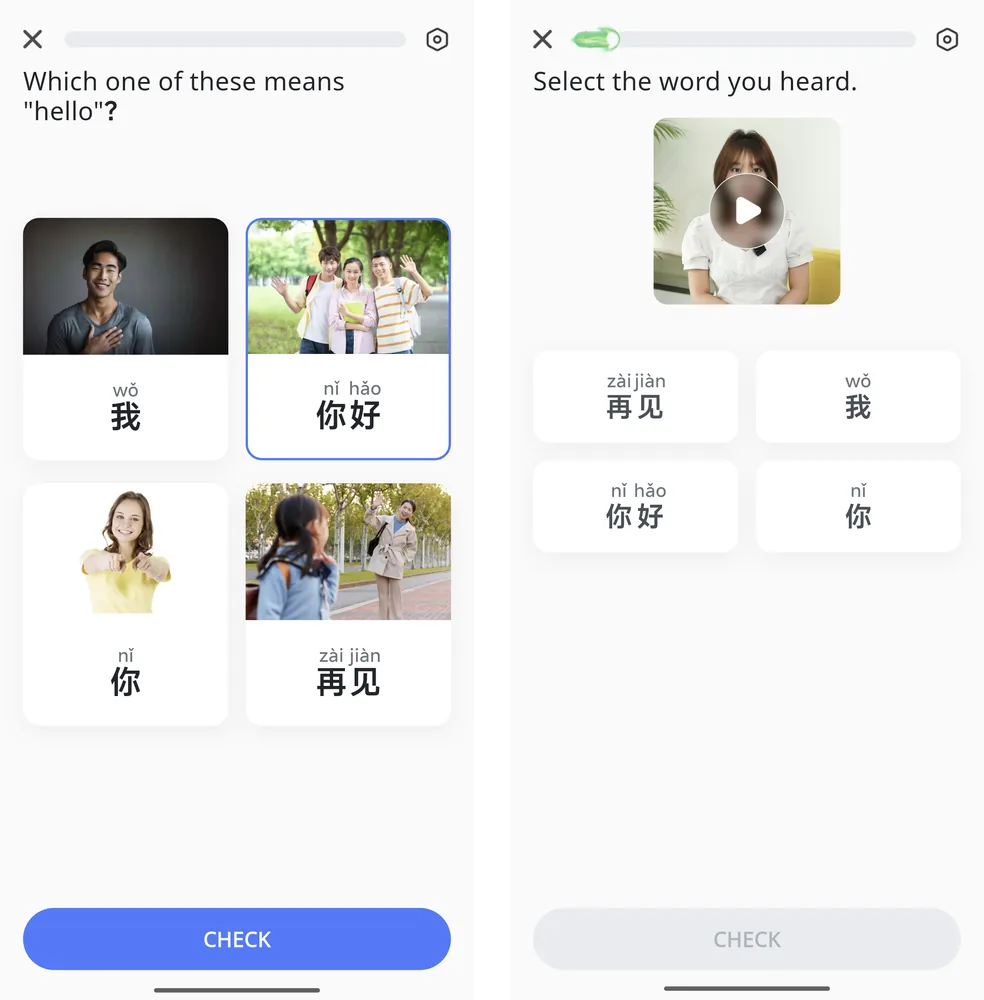
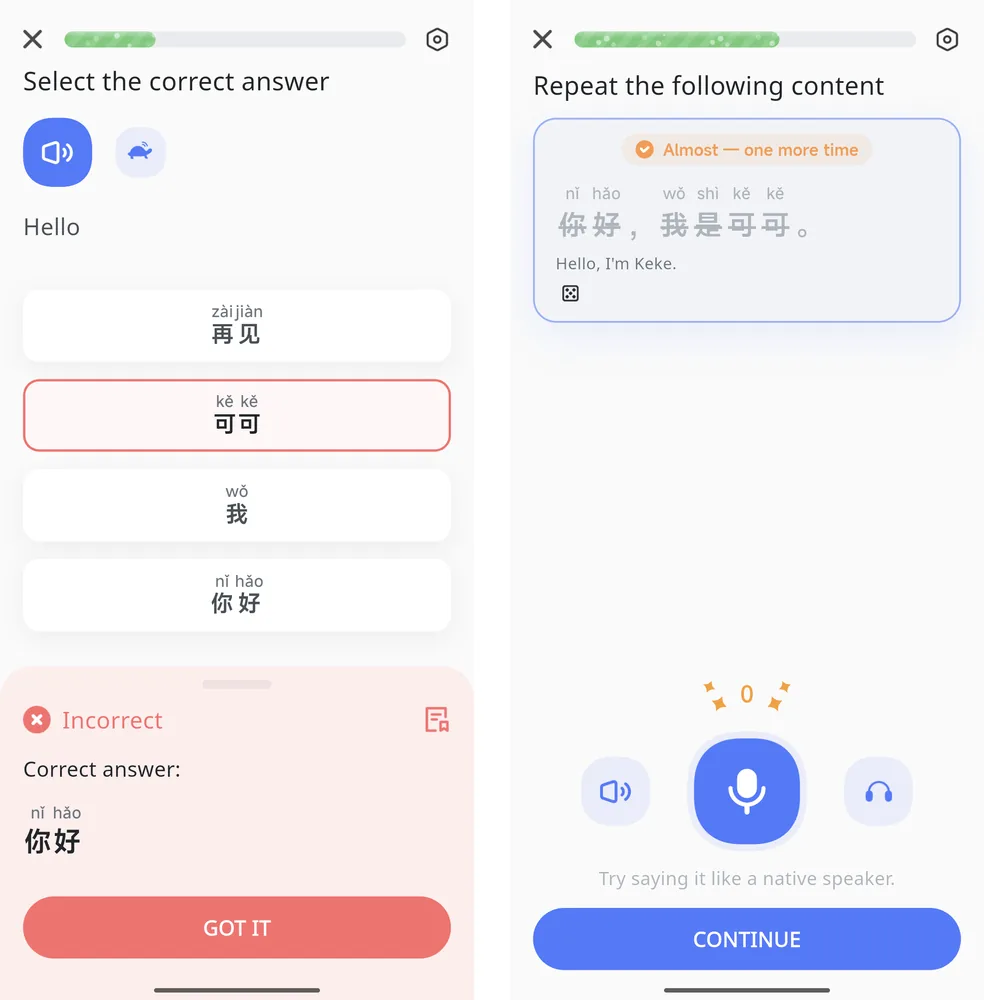
Lesson 1 mixes the two from the start. First you match photos to words. Then a real teacher appears in a short video and says a word, and you pick the one you heard. Then an audio question plays, with a slow-speed button next to the speaker for when the syllables run together. About ten screens in, the app asks you to read a whole sentence out loud: 你好,我是可可。 "Hello, I'm Keke."
My first attempt at that sentence scored a flat zero. The label read "Almost — one more time," the microphone stayed where it was, and I tried again. The second time the sentence turned green, the label said "Nice," and a 97 appeared above the mic. That thirty-second swing from zero to 97 is the whole beginner experience in miniature: you can fail in private, instantly, and fix it.
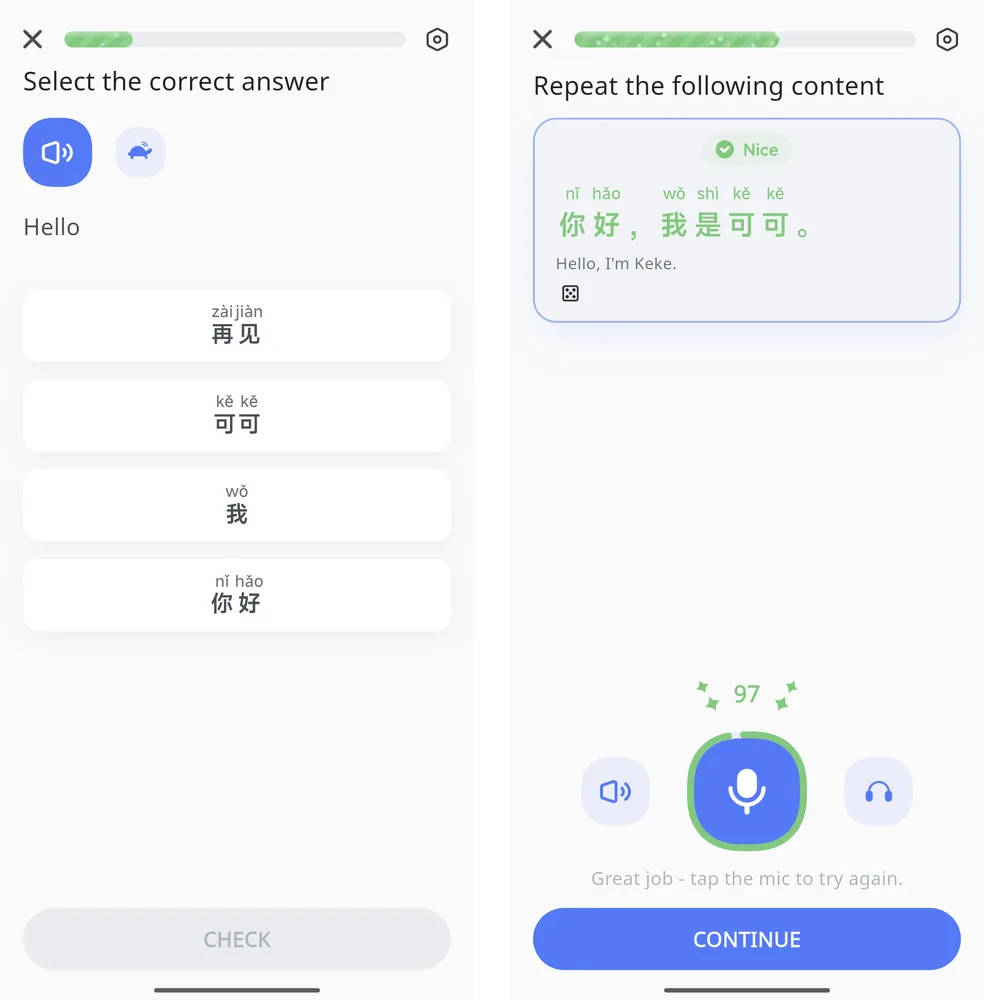
One more thing I liked: the people in the questions are real teachers on camera, not cartoons and not a synthetic voice. For a beginner learning to read faces and mouths as much as sounds, that is not a cosmetic choice.
Test 3: Are the Pieces Connected?
Sound, meaning, grammar, and the written character should show up together, not in four different modules. Characters are where most apps drop the ball, so I watched for it.
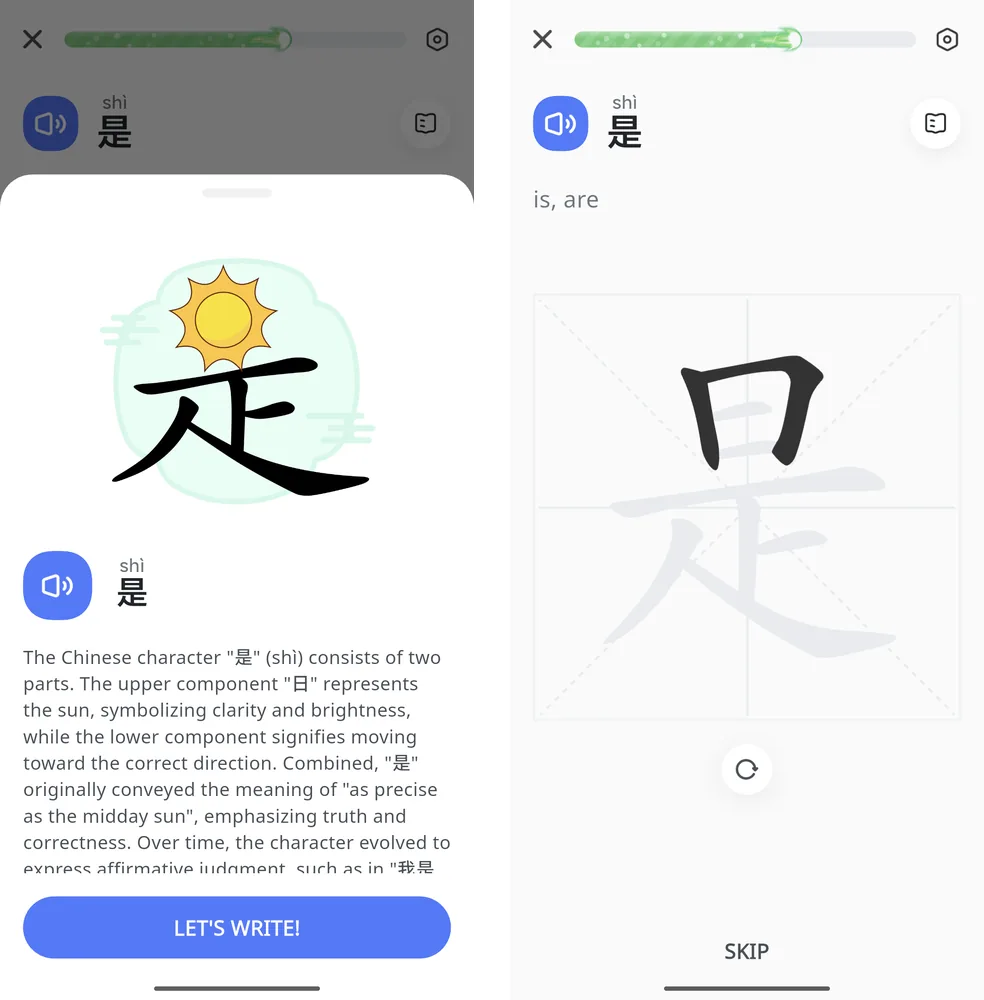
In Lesson 1, 是 (shì, "is, are") turns up three times. First you hear it inside a video question. Then a grammar card spells out the pattern, Noun 1 + 是 + Noun 2, with two example sentences. Then a character card shows you that 是 is built from 日, the sun, tells you a short story about where it came from, and hands you a grid to write it stroke by stroke. Same character, same twelve minutes, four different angles. By the end I could hear it, use it, and write it, and I had not opened a second app.
Test 4: What Happens When You Get It Wrong?
This is where beginner apps show their character. I got eight of fifteen items wrong in Lesson 1, some on purpose and some not, so I saw the wrong-answer screen a lot.
It is short and it is kind. A red panel says "Incorrect," shows the correct answer, and gives you a "GOT IT" button. That is all. No lives lost, no lecture, no cartoon crying. On the read-aloud tasks the microphone simply stays put and you go again. When you do string a few right answers together, a small "Focus × 2" badge pops onto the progress bar and keeps counting. I found myself trying to keep that number alive, which is exactly the kind of small hook a beginner needs.
Test 5: Can You See What Comes Next?
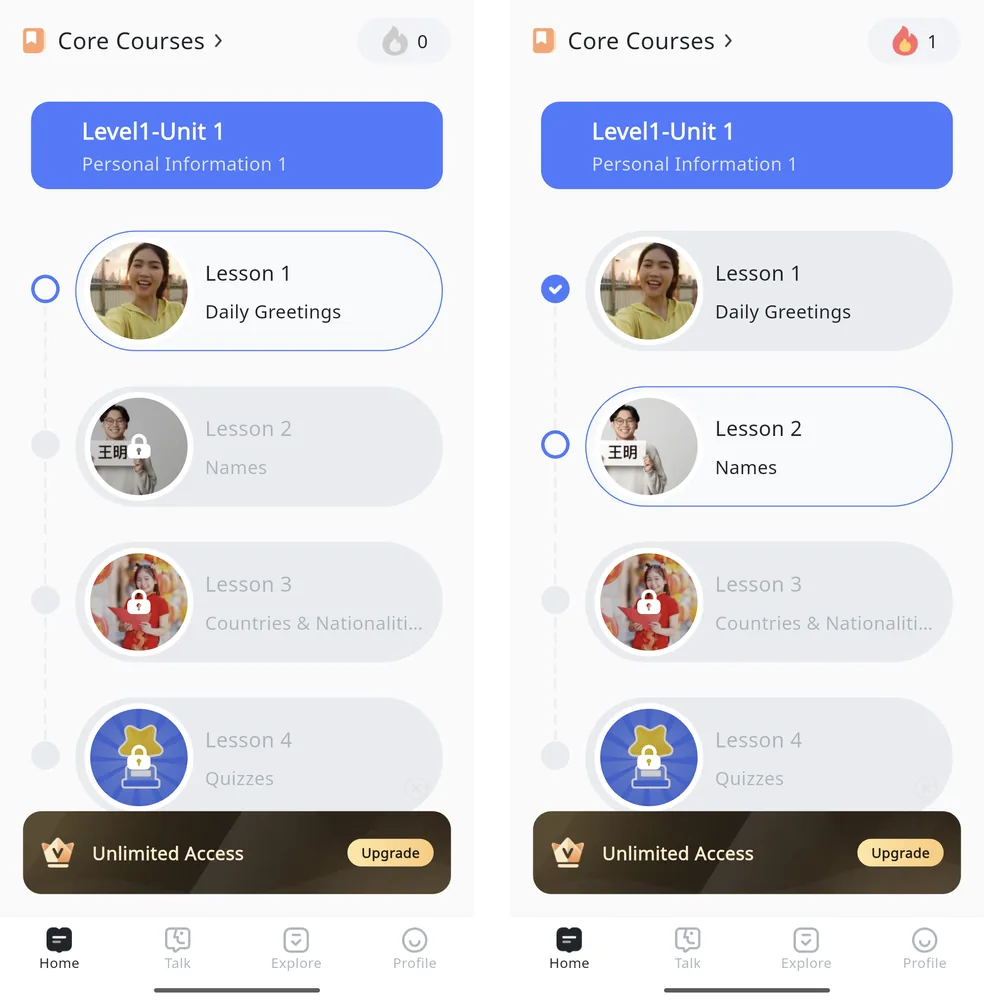
Plenty of apps are fun for a week and then leave you wondering what to do. SureChinese lays the main course out as a map: Level, Unit, Lesson. Unit 1, "Personal Information 1," runs Daily Greetings, Names, Countries & Nationalities, and a Quizzes lesson. When I finished Lesson 1, it got a tick, Lesson 2 unlocked, and the flame in the corner lit up with a 1. Units further down carry a VIP badge, so you can see exactly where the free part ends and the subscription begins. No surprises.
The Part Most Beginner Apps Skip: Actually Talking
SureChinese, an app backed by New Oriental Education, runs on two engines: courses structured around HSK 1–4, and an AI conversation partner in the Talk tab. It works on iOS and Android.
The company calls its speaking approach the Spiral Speak Method, and it moves in four stages: Echo (listen and repeat), Choice (pick a reply and say it), Mini-Dialogue (a short back-and-forth), and Free Talk (answer in your own words). The read-aloud tasks in the lessons are the Echo end. The Talk tab is where the other end lives.
Each Talk lesson is a scenario with a job to do. Mine was asking a friend for travel tips before a holiday. The AI partner speaks first, with pinyin above every character, and you answer by voice or by typing. What surprised me was how hard it is to get stuck. An "Example" button offers three ready-made replies. A lightbulb shows one sentence to "Try saying it like this…" with pinyin. A translate box turns whatever you type in English into Chinese before you send it. And if you want to test your ears, one tap blurs the Chinese so you have to listen; another tap shows the English.
After each reply, a small tag appears under your message. Green "Grammar" means it worked. Orange "Suggestion" means the app has a better version. I tapped one and got my sentence, a more natural rewrite with a PRACTICE button, and a plain-English note telling me to put a question mark after 景点 so my two thoughts stopped running into each other. That is the kind of correction a teacher gives you across a desk, and I got it at 4:45 in the afternoon with nobody else in the room.
New Oriental's own launch article for SureChinese describes the same design: step-by-step courses, real-life scenarios, AI dialogue, and feedback on pronunciation and word choice. Having used it, I would put it more plainly. The lessons teach you the words. Talk makes you spend them.
What It Costs
You can start for free. The free plan covers the first unit of the main course and one Talk scenario a day, with a small energy budget for AI replies that you top up by checking in each morning. I burned through five replies in one sitting and hit the "Free energy used up" screen, so the budget is real. A subscription unlocks the full HSK 1–4 path, unlimited conversation, and the AI feedback features. Prices vary by market, so check the store listing rather than trusting a number in an old blog post.
My First Week, As It Actually Went
Skip the study-plan template. Here is what a week looked like.
Day 1 was Lesson 1, twelve minutes, eight mistakes, one streak. I learned 你好, 我, 你, 再见, and the word 是, and I could say "Hello, I'm Keke" well enough to get a 97.
Day 2 I went back and did the read-aloud tasks again before touching anything new. The score tells you which syllable is letting you down, so that is where the time went. I also spent ten minutes in the Pinyin Course on b, p, m, f, because 不 and 谱 were still coming out the same.
Day 3 was my first Talk scenario. I typed more than I spoke, and I leaned on the hint button twice. The Study Report at the end gave me three stars, a Pronunciation Accuracy figure, a count of the words I had used, and a breakdown into Precision, Fluency, and Completeness. More useful than the numbers: it told me which sentence I had said best.
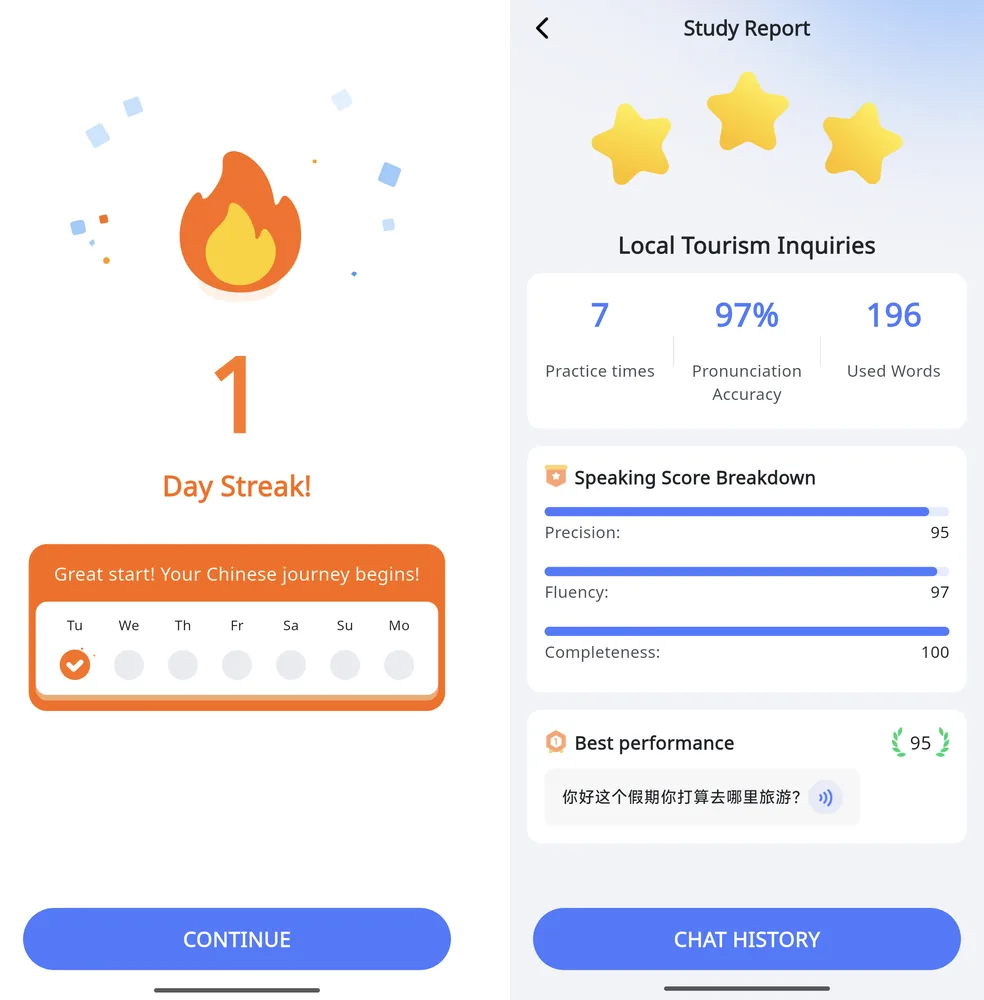
Day 4 the next Talk scenario had unlocked at midnight, so there was exactly one conversation waiting and no decision to make. That design choice looks like a limitation until you realize it removes the "what should I do today" question that kills most self-study.
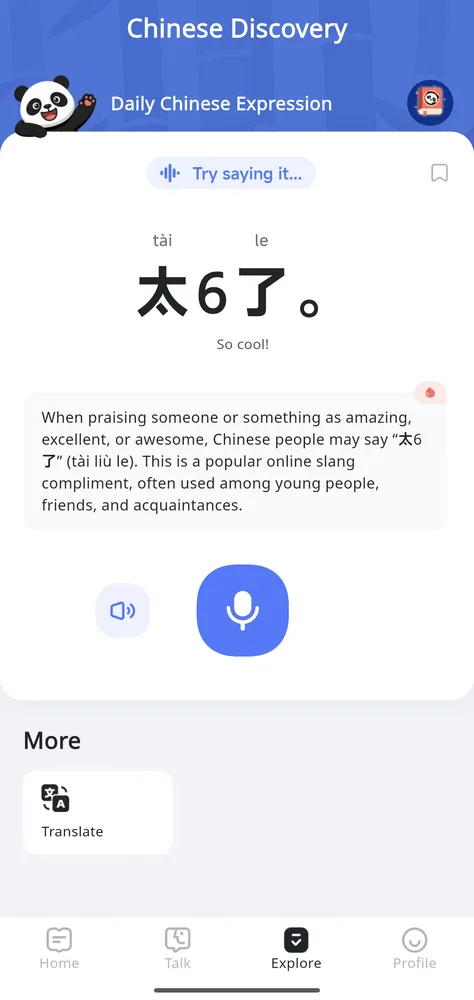
Day 5 I found the Explore tab, which serves one "Daily Chinese Expression" with pinyin, a note on how people really use it, and a microphone to say it back. Mine was 太6了, "So cool!", which is slang I will not need for a while. Fun, though, and a two-minute habit is easier to keep than a twenty-minute one.
Where It Stops
SureChinese is a daily base, not a whole education. If you keep tripping over the same tone and want someone to explain why, book a tutor for an hour. If you are sitting an exam, get the official format and a proper mock from the test authority; the app will not pretend to be one. And when an AI correction looks odd to you, check it. Good habits beat blind trust.
Frequently Asked Questions
Is SureChinese suitable if I know zero Chinese?
Yes. The main course starts at Level 1, Unit 1 with greetings, and a separate Pinyin Course starts with b, p, m, and f. The first lesson uses photos, teacher videos, audio with a slow-speed option, and short read-aloud tasks, so you are never asked to do something you have not just been shown.
Does SureChinese teach characters as well as speaking?
Yes, and inside the same lesson. Each new character comes with a card explaining its parts and origin, then a stroke-by-stroke tracing grid. The same lesson also has you build sentences from word tiles and read sentences aloud.
Can I use SureChinese in a language other than English?
Yes. The interface comes in twelve languages, including English, Vietnamese, Thai, Indonesian, Spanish, Russian, Arabic, Japanese, Korean, Khmer, and Bengali.
Can I practice speaking without a tutor?
Yes. The Talk tab gives you an AI partner, a new scenario every day, and hints, examples, and translation inside the conversation, so you can practice at any hour without booking anyone.
Is SureChinese free?
You can start for free: the first unit of the main course plus one Talk scenario a day, with an energy budget for AI replies that refills when you check in. A subscription unlocks the full course, unlimited conversation, and the AI feedback features. Check the store listing for pricing in your market.
How fast will I learn?
Faster than you expect on day one, slower than you hope by week three, like every language. What the app changes is that you always know what to do next and you find out immediately how you did.
The Bottom Line
For a complete beginner, pick the app that gets you through one full loop on the first day and puts the next step in front of you on the second. SureChinese does that: a course map you can read at a glance, lessons that teach sound, meaning, grammar, and characters together, instant feedback you can act on, and a conversation partner that always has a hint ready. Start with Lesson 1. It takes twelve minutes, and you will get some of it wrong. That is the point.
Learn Chinese. Actually speak it.
Build your foundation step by step, then start using Chinese from day one. Start for free on iOS or Android.