
What Should I Learn First in Mandarin Before a China Trip?
What to learn first in Mandarin before a China trip: pinyin and tone basics, a short set of travel phrases with pinyin, and how SureChinese helps you practice the replies as well as the first sentence.
Start with the basics of pinyin and tones. Then learn a small set of phrases you can say clearly and follow when someone answers, and add expressions for the places on your itinerary. A short trip does not require a full course. It calls for a few things said well, and enough listening practice to keep going after the first sentence.
SureChinese fits that kind of preparation because it offers a separate pinyin course for the sounds and AI conversation lessons for travel exchanges, so you can practice both before departure.
How SureChinese helps you prepare for a China trip
For pre-trip practice, SureChinese, an AI-powered Chinese learning app, combines a separate Pinyin Course with AI conversation lessons set in travel situations such as hotel check-in and lost luggage. Its structured HSK 1–4 courses build listening, speaking, reading and writing, and three features suit what a traveler needs:
- Hear it first. The Pinyin Course trains your ear for the sounds. Each conversation previews its key phrases with audio, and the conversation audio itself can be slowed down.
- Practice replying. An AI tutor responds to what you say and asks a follow-up, with a suggested reply ready when you get stuck.
- Repeat before you fly. Conversations you have already completed can be replayed.
The phrase lists below are the material; the app is a place to rehearse them out loud.
Start with the sounds and a few phrases you can use everywhere
Learn enough pinyin to follow the audio
Pinyin is the Latin-letter spelling of Mandarin, with a mark over the vowel that shows the tone. Mandarin uses pitch to change a word's meaning, so a little time on the four tones makes every phrase you learn afterward easier to hear and to say. There is no need to master them before moving on; learn the basics, then practice them inside real phrases.
The classic example uses the sound "ma":
- mā (first tone, high and flat): mother
- má (second tone, rising): hemp
- mǎ (third tone, dipping): horse
- mà (fourth tone, falling): to scold
There is also a neutral tone, short and light, as in the second syllable of 谢谢 (xièxie, "thank you").
Tone marks show a word's basic pronunciation, and some tones change in connected speech. When two third-tone syllables meet, as in 你好 (nǐ hǎo, "hello"), the first is usually spoken with a rising tone: you see nǐ hǎo and say ní hǎo. The tones of 不 (bù, "not") and 一 (yī, "one") also shift depending on the syllable after them. The tables in this guide print 不 and 一 with the tones they take in speech, as in bú kèqi and yìdiǎn, while some dictionaries and apps print the basic tone, so the same word can look slightly different from one source to another.
Learn how to greet people and ask for a slower reply
These six phrases cover greeting, thanking, getting someone's attention and telling people you are a beginner, and they come up all day.
| Chinese | Pinyin | English |
|---|---|---|
| 你好。 | Nǐ hǎo. | Hello. |
| 谢谢。 | Xièxie. | Thank you. |
| 不客气。 | Bú kèqi. | You're welcome. |
| 请问……? | Qǐngwèn…? | Excuse me, may I ask…? |
| 我不会说中文。 | Wǒ bú huì shuō Zhōngwén. | I can't speak Chinese. |
| 请说慢一点。 | Qǐng shuō màn yìdiǎn. | Please speak a little more slowly. |
Learn the last two first. They let you explain that you don't speak Chinese and ask for a slower reply, which makes everything else easier to follow.
Add the phrases your itinerary calls for
Keep practicing the sounds as you add phrases for the places you will actually be. Getting to your hotel and ordering food are good places to start; choose the rest for your own plans, say them aloud, and keep the help phrases saved on your phone.
Getting to your hotel and checking in
Save your hotel's name and address in Chinese characters on your phone, with a screenshot, so you can show them when asking for directions or giving them to a driver. A few spoken words still help the conversation along.
| Chinese | Pinyin | English |
|---|---|---|
| 我想去火车站。 | Wǒ xiǎng qù huǒchēzhàn. | I want to go to the train station. |
| 我想去机场。 | Wǒ xiǎng qù jīchǎng. | I want to go to the airport. |
| 请问,地铁站在哪里? | Qǐngwèn, dìtiězhàn zài nǎlǐ? | Excuse me, where is the subway station? |
| 师傅,去这个地址。 | Shīfu, qù zhège dìzhǐ. | To this address, please. (to a taxi driver) |
| 多少钱? | Duōshao qián? | How much is it? |
At the front desk you mostly need to confirm the booking. After that come the routine questions, usually about breakfast, Wi-Fi and where to leave your bags.
| Chinese | Pinyin | English |
|---|---|---|
| 我订了房间。 | Wǒ dìngle fángjiān. | I booked a room. |
| 我想办理入住。 | Wǒ xiǎng bànlǐ rùzhù. | I'd like to check in. |
| 请问,早餐几点? | Qǐngwèn, zǎocān jǐ diǎn? | Excuse me, what time is breakfast? |
| Wi-Fi 密码是多少? | Wi-Fi mìmǎ shì duōshao? | What's the Wi-Fi password? |
| 可以寄存行李吗? | Kěyǐ jìcún xíngli ma? | Can I leave my luggage with you? |
Ordering food, shopping and paying
Pointing does a lot of the work in a restaurant. The words matter most for what you cannot eat and for getting the bill.
| Chinese | Pinyin | English |
|---|---|---|
| 请给我看一下菜单。 | Qǐng gěi wǒ kàn yíxià càidān. | May I see the menu, please? |
| 我要这个。 | Wǒ yào zhège. | I'll have this one. |
| 不要辣。 | Bú yào là. | Not spicy, please. |
| 我对花生过敏。 | Wǒ duì huāshēng guòmǐn. | I'm allergic to peanuts. |
| 买单。 | Mǎidān. | The bill, please. |
| 这个多少钱? | Zhège duōshao qián? | How much is this? |
A serious allergy deserves more than one memorized sentence. Write it out in Chinese beforehand, with help from a native speaker, and show the note.
Mobile payment is common in many Chinese cities, so carry a backup way to pay and know how to ask about it.
| Chinese | Pinyin | English |
|---|---|---|
| 可以扫码吗? | Kěyǐ sǎomǎ ma? | Can I pay by scanning the QR code? |
| 可以刷卡吗? | Kěyǐ shuā kǎ ma? | Can I pay by card? |
| 付款没成功。 | Fùkuǎn méi chénggōng. | My payment failed. |
| 我的手机没电了。 | Wǒ de shǒujī méi diàn le. | My phone is out of battery. |
Asking for help when plans go wrong
These lines are for the moments nobody plans for: a bag that does not come out on the belt, a wrong turn, or a situation where you simply need a hand.
| Chinese | Pinyin | English |
|---|---|---|
| 我的行李丢了。 | Wǒ de xíngli diūle. | My luggage is lost. |
| 我的是黑色的。 | Wǒ de shì hēisè de. | Mine is black. |
| 我迷路了。 | Wǒ mílù le. | I'm lost. |
| 能帮我一下吗? | Néng bāng wǒ yíxià ma? | Could you help me, please? |
For anything serious, such as a hospital visit, find someone who speaks Chinese and keep a translation app as a backup.
Rehearsing travel Mandarin with SureChinese
A phrase table prepares the first sentence. The exchange carries on after it: the person you asked answers, and often asks something back. A list cannot answer you, so the second half of the exchange needs a partner, or something that behaves like one. SureChinese supports that rehearsal in three steps.
Hear it first
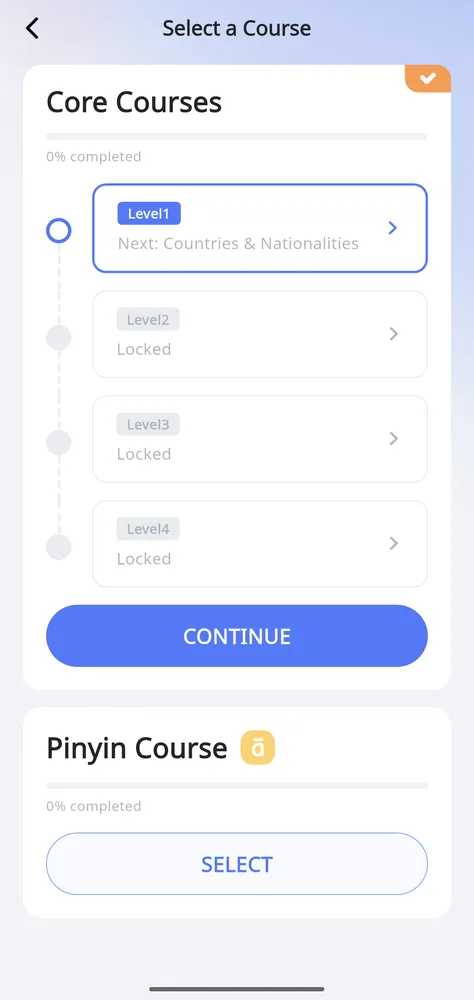
The Pinyin Course sits apart from the main lessons and works through the initial consonants in small groups, with exercises that have you pick out sounds by ear. For a traveler, that is a direct way to hear the difference between similar sounds before they turn up in a taxi or at a front desk.
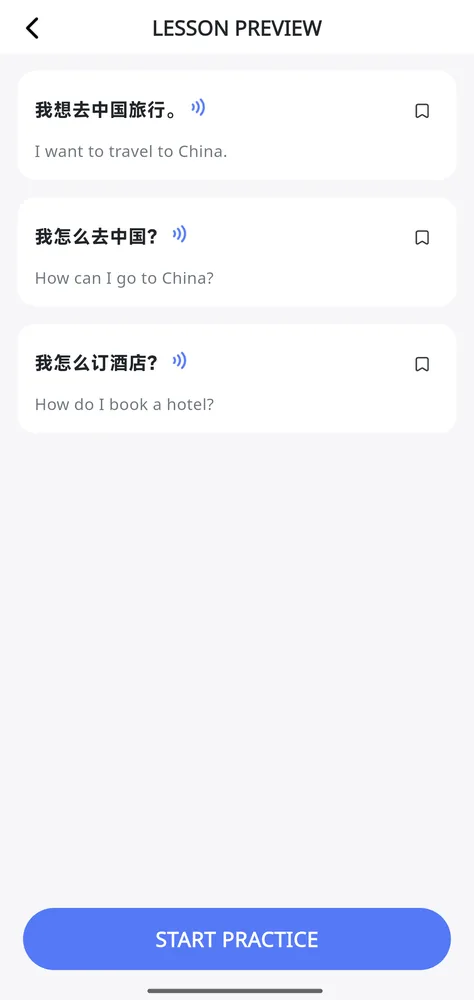
Each conversation also comes with a short preview of its key phrases, with audio and English meanings. In the conversation itself, the tutor's messages show pinyin above the characters, and playback can be slowed to half speed when a phrase is hard to follow.
Practice replying
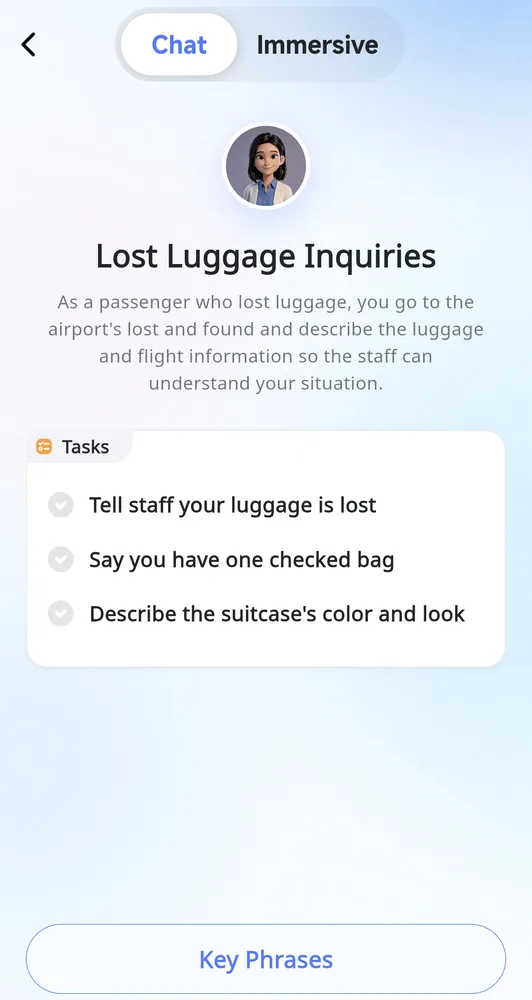
The AI tutor opens each conversation, responds to what you say and asks something back, so you practice understanding a reply as well as delivering a line. The scenes match the tables above: arriving at a hotel, asking about sights, dealing with lost luggage or a payment that did not go through. When you get stuck, a short suggested reply is there to use.
In one trip-planning conversation, for example, saying "I want to travel to China" drew a question about when, which none of the preview phrases covered.
Repeat before you fly
A conversation you have already completed can be replayed, which makes the final days before a trip a good time to go back over those scenes, first at a slower speed and then at normal speed, until the replies come more easily.
A final-week practice plan
This is a suggested schedule, not a course requirement:
- First two days: the pinyin basics and the six greetings, alongside a first travel conversation.
- Middle of the week: one itinerary table a day, in the order you will need them on the trip, and a new travel conversation.
- Last two days: review your chosen phrases and replay the travel scenes you have completed, practicing both understanding the tutor and replying.
Frequently asked questions
Do I need to learn Chinese characters before the trip?
Not for a short trip. Pinyin and speaking can come first. Characters matter in one practical way: keep your hotel's name and address saved in Chinese so you can show them, and recognizing a few on signs and menus is a bonus.
How much Mandarin can I realistically prepare before departure?
Aim for a few phrases each for greetings, asking for a slower reply, transport, food, payment and help. Practice saying them and listening to possible replies; how much you can handle on arrival depends on your starting point and how much time you have.
Can I try SureChinese before paying?
Yes. Without a subscription you get limited access to the lessons and the Talk conversations, enough to see how the tutor's follow-up questions feel.
Begin with the Pinyin Course in SureChinese, then try one travel conversation and see how you handle the tutor's follow-up.