
What Mandarin Pronunciation App Works for Non-English Speakers?
SureChinese combines multilingual interface support, pinyin practice with audio and video, read-aloud feedback, and AI conversations to help learners practice Mandarin pronunciation. Spanish-language examples show how translated instructions and conversation support can make practice easier to follow.
Learning Mandarin pronunciation takes practice. When exercise instructions are in a language you are less comfortable with, understanding the task can add to the challenge. Instructions in a familiar language can help you focus on the sounds: listening to a model, trying it yourself, and reviewing what to practice again.
SureChinese combines multilingual interface support with structured Chinese lessons and AI speaking practice. The Spanish-language examples in this article illustrate how translated instructions and conversation support can help learners work on Mandarin pronunciation.
SureChinese at a glance for pronunciation practice
Backed by New Oriental Education, SureChinese offers structured HSK 1–4 courses and AI speaking practice on iOS and Android.
For learners who prefer instructions in a language other than English, these features can be particularly useful:
- Multiple interface languages, including Spanish. The examples below show Spanish instructions and translations within learning activities.
- Pinyin practice with audio and video. Recordings and teacher demonstrations help learners connect pinyin spellings with Mandarin sounds.
- Read-aloud exercises with pronunciation feedback. Pinyin and translations support sentence practice, while color-coded feedback highlights areas to review.
- AI conversations with language support. Pinyin, translations, and suggested replies can help learners understand the exchange and form an answer.
Together, these features offer support as you move from recognizing sounds to using them in spoken replies.
Exercise instructions in a language you understand
Language support is most useful when it extends beyond menus into learning activities. SureChinese offers multiple interface languages. Check the language options in the app's settings to find your preferred language.
The examples here focus on Spanish, showing how the selected language appears in exercise instructions and translations. These examples do not establish how fully every supported language is used across the app. Before committing to a learning routine, try a few activities to check whether the language support meets your needs.
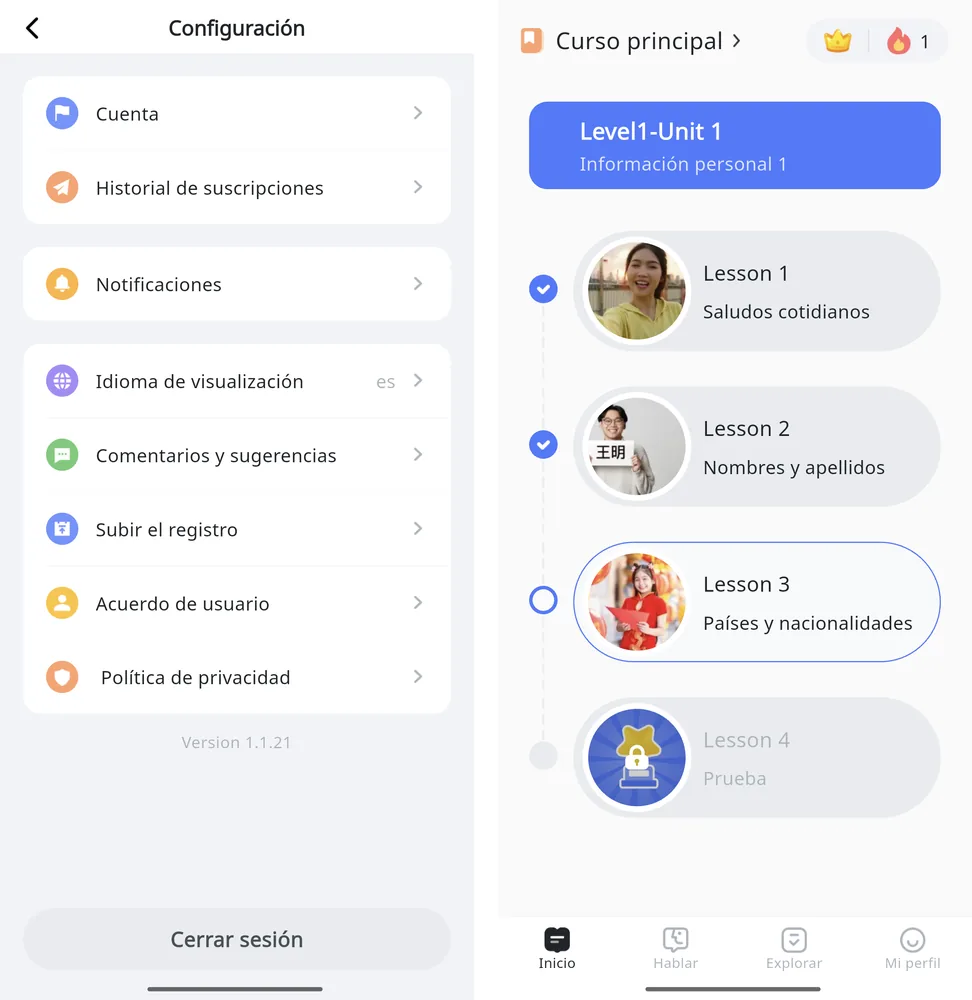
Examples from the Spanish interface
In one pinyin exercise, the instruction "Elige la pronunciación correcta" means "Choose the correct pronunciation." The learner selects the recording that matches the displayed pinyin spelling. Feedback such as "Incorrecto" identifies an incorrect answer.
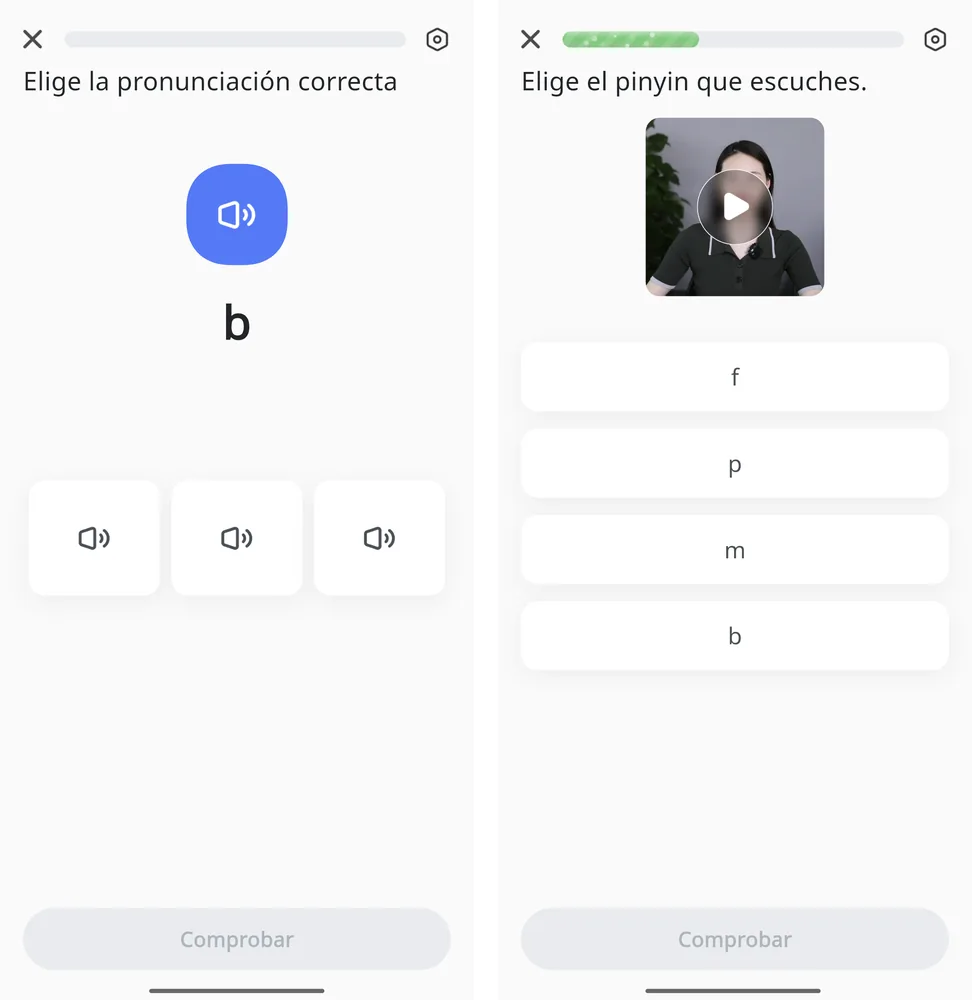
In a Talk conversation, the Spanish line "China es vasta: ¿qué ciudad quieres visitar?" means "China is vast: which city would you like to visit?" A translation can help you understand the question before preparing a reply in Mandarin.
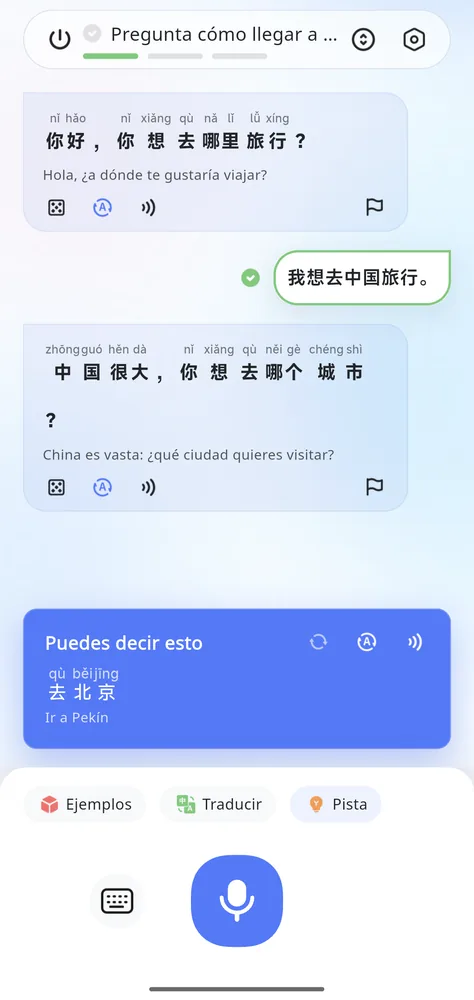
Pinyin practice with audio and video
Pinyin uses the Latin alphabet, but spellings such as b, p, and zh do not necessarily represent the sounds learners expect from other languages. Listening to Mandarin examples helps you connect the written forms with their intended pronunciation.
SureChinese's pinyin practice includes recordings and teacher videos. Activities such as matching a sound to a pinyin spelling give you a way to check what you hear before moving on to sentence practice.
Use the audio as a model: listen, repeat, and compare your attempt with the example. If a sound is unfamiliar, return to it several times rather than relying on how the spelling looks.
Initial consonants are only one part of Mandarin pronunciation. Finals and tones also need attention. As you move into words and sentences, listen to the whole syllable and its tone, as well as how it sounds in connected speech.
Read-aloud practice with pinyin, translations, and color feedback
Read-aloud exercises bring individual sounds into sentences. A practice card shows Chinese characters with pinyin and a translation, helping you work out the pronunciation and understand the meaning before you speak.
One Spanish-language example uses 你们是中国人吗? ("Are you Chinese?", addressed to more than one person), with the translation "¿Sois chinos?" and the instruction "Repita lo siguiente" ("Repeat the following"). "¿Sois chinos?" uses the vosotros form found in much of Spain; "¿Son ustedes chinos?" is an alternative commonly used in Latin America.
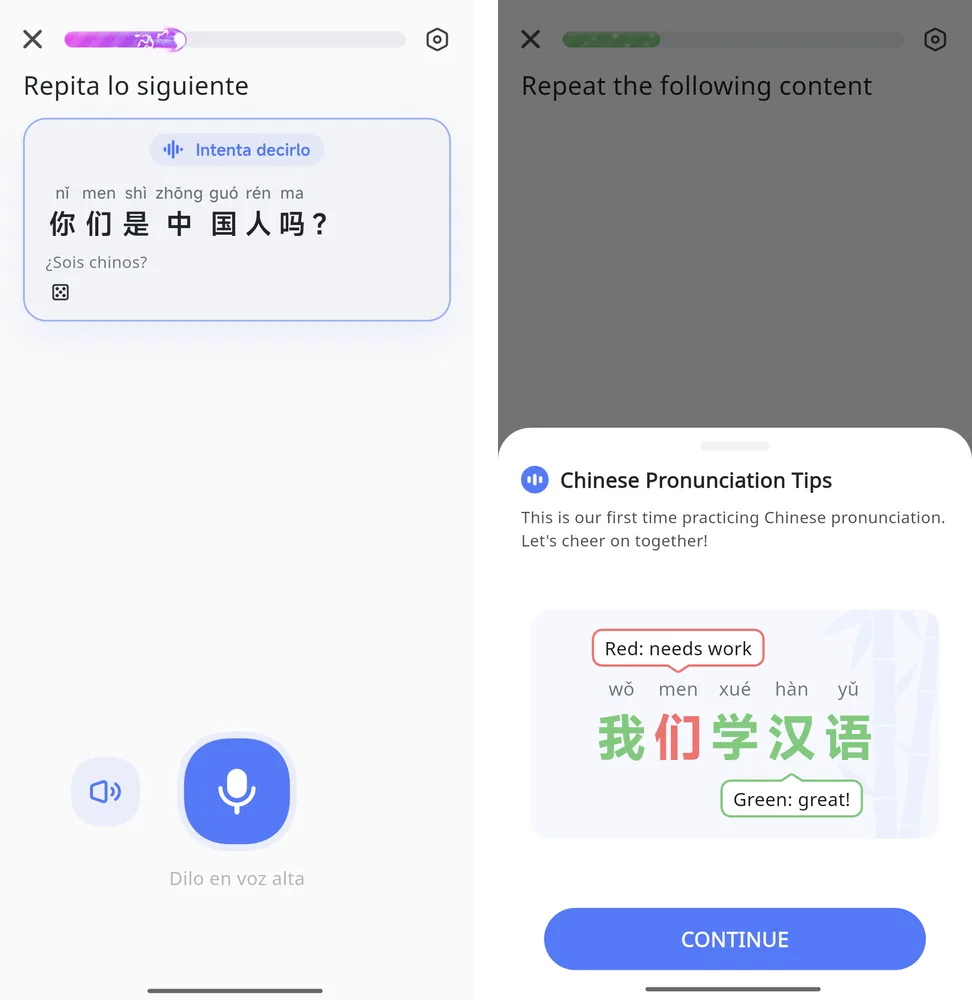
After you speak, color-coded feedback highlights parts of the sentence to review. Green indicates stronger pronunciation, while red points to areas that may need more practice. Use the colors alongside the app's explanations, model audio, and your own recording to decide what to try again.
A practical approach is to focus on a short phrase first, then return to the complete sentence. Treat the feedback as guidance for the next attempt rather than a complete measure of your speaking ability.
AI conversations with pinyin and translation support
Pronunciation also matters when you form your own replies. In SureChinese's Talk section, scenario-based conversations give you a reason to use the sounds and phrases you have practiced.
Pinyin and translations can help you understand the tutor's messages while you are still learning to recognize characters. Suggested replies provide a starting point when you are unsure how to respond.
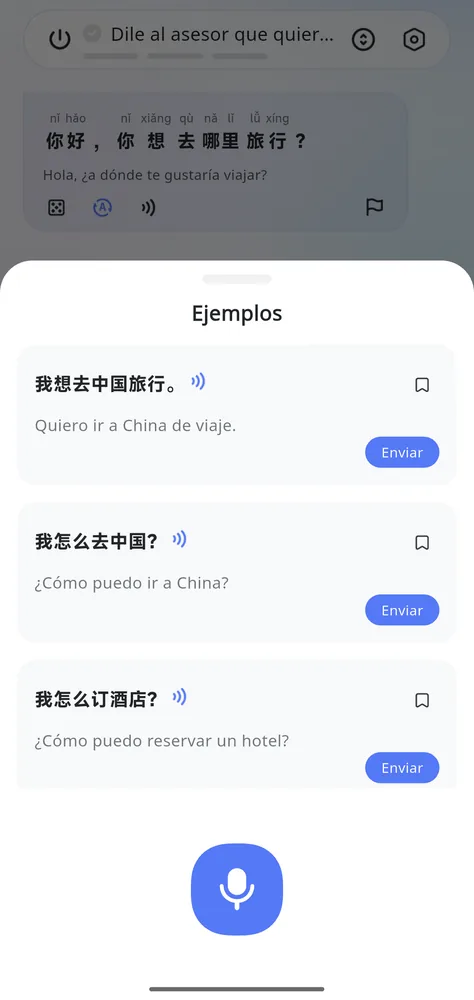
To turn the exchange into speaking practice, answer aloud. Try adapting a suggested reply to express your own preference or plan. As you become more comfortable, attempt an answer before checking the suggestion.
Choose the available text and audio settings that suit your needs. When practicing with slower playback, return to normal speed as well so you can hear the rhythm of the complete sentence. Listen for both individual sounds and Mandarin tones.
Where to start with pronunciation practice
If you prefer to study in a language other than English, start by checking the app's language settings. Then try a few exercises to see whether the instructions and translations help you follow the activities comfortably.
Begin with a short pinyin activity, practice a sentence aloud, and then try answering an AI tutor in Mandarin. Afterward, choose one sound or phrase to revisit. This gives your next practice session a clear focus.
SureChinese offers some lessons for free. Check the app for the current selection of free pronunciation activities, access to Talk, and subscription details before choosing a plan.
Frequently asked questions
Which interface languages does SureChinese support?
SureChinese offers multiple interface languages, including English, Spanish, Vietnamese, Thai, Indonesian, and Russian. Check the app's language settings for the current list. The examples in this article focus on Spanish; the availability of a language in the settings does not, by itself, confirm that every activity is fully translated.
Can beginners practice pronunciation before they can read many Chinese characters?
Yes. Pinyin, recordings, and teacher demonstrations can help beginners practice Mandarin sounds while they are still learning characters. Read-aloud exercises combine pinyin with sentence practice, and conversation support can help learners understand and respond to the AI tutor.
Can I try SureChinese for free?
Yes. According to the SureChinese website, the first few lessons of each level are available for free, and a subscription unlocks full course content and access to all app features. Check the app for the current availability of free pinyin activities and Talk practice.
Explore SureChinese, choose your preferred interface language, and start with an available pronunciation activity. Listen to the model, try it aloud, and choose one part to practice again.